Archivo del Autor: ale

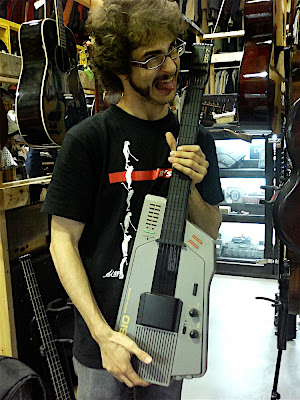
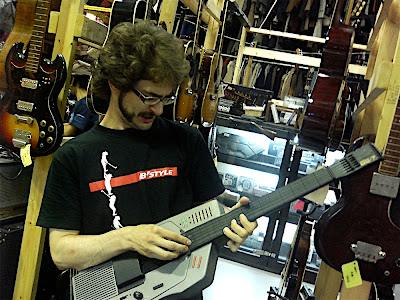
Casio DG-7: guitarra digital / デジタルギター / digital guitar

Hoy hemos ido a comprar un amplificador para el bajo de ai, y en la misma tienda me he encontrado un cacharro muy curioso.

今日は愛のベース用のアンプを買いに行って、お店ですごい物を発見した。

Today we bought an amp for ai’s bass, and I found a quite interesting device at the same shop.

Casio DG-7

Casio lo llama guitarra digital, y es prácticamente un casiotone con cuerdas en vez de teclas. Tiene altavoz interno y se pueden poner ritmos guapos mientras tocas. Funciona con 6 pilas AA.

カシオのデジタルギターというもので、ギター型のエレクトーンらしい。内蔵スピーカーとドラムマシーン付きで、単3電池6本で動く。

Casio calls it a digital guitar, and it’s like a guitar-shaped casiotone. It has an internal speaker and drum machine, and it works with 6 AA batteries.

Casio DG-7

No lo he comprado porque valía más de lo que llevaba encima, pero no es nada que no me pueda permitir (¡me sobra el dinero!). Si alguien conoce este artefacto le agradecería mucho un comentario, porque la duda me corroe.

あまり現金を持っていなくて買わなかったけど、払えない金額ではない。誰かこの楽器のことを知っている人がいたらコメントをお願いします。迷っています。

I didn’t buy it because I didn’t have that much money with me, but I can afford it. So if anybody knows this artifact I’d appreciate any comment, because I’m thinking about buying it or not.

Blogs de japoneses en español — 日本人が書くスペイン語ブログ — Blogs in Spanish by the Japanese

Me interesa mucho el intercambio cultural España-Japón, o en general entre gente que habla español y gente que habla japonés. Por esto me gusta mucho leer blogs de japoneses que escriben en castellano. Estas es una lista de los que conozco y están en activo.

日本とスペインの交流、及び日本語をしゃべる人とスペイン語をしゃべる人のコミュニケーションにすごい興味があるので、日本人がスペイン語で書くブログを読むのは楽しい。下記は最近更新されている僕が知っているそういう人達のブログのリスト。

I’m very interested in cultural exchange between Spain and Japan or, to put it in a general way, between Japanese speakers and Spanish speakers. That’s why I enjoy reading blogs written in Spanish by Japanese people, and these are the ones that I know and are getting regular updates.

  • Diario de Pajarito
    elico vive cerca de Osaka y mantiene un blog personal en español.
    elicoさんは大阪の近くに住んでいる。スペイン語で日記を書いている。
    elico is a girl who lives near Osaka, and maintains a Journal in Spanish.
  • ガリシアへ行こう! / Imos a Xapon!
    masashi es un japonés en Galicia. Escribe en español, en japonés, y a veces en gallego.
    masashiさんはスペインのガリシアにいる日本人。スペイン語と日本語とたまにガリシア語で書いている。
    masashi is a Japanese guy in Spain’s Galicia. He’s writing in Spanish and Japanese, and sometimes in Galician.
  • Una japonesa en Japon ー ある帰国子女のブログ
    nora vive en Tokio, y acaba de empezar un blog en español y japonés.
    東京に住んでいるnoraさんは最近スペイン語と日本語でブログを書き始めた。
    nora lives in Tokyo, and has just started writing a blog in Spanish and Japanese.
  • Una oveja negra en Tokio
    Litsuko es escritora en Tokio y escribe su blog en español.
    東京の作家さんのLitsukoさんはスペイン語でブログを書いている。
    Litsuko is a writer in Tokyo, and also maintains a blog in Spanish.
  • Un Paisa borracho en Tokio
    Kensuke ha vivido en Colombia, y ahora escribe en español desde Tokio.
    コロンビアから帰ってきたKensukeさんは今東京でスペイン語のブログを書いている。
    Kensuke came back from Colombia and started a blog in Spanish that he writes from Tokyo.

Y por último, mi favorito.

最後に、僕のお気に入り。

And here goes my favorite.

  • pepino ペピーノ / game boy rock band (ai)
    ai, la cantante de pepino, escribe en este mismo blog en español, japonés e inglés.
    ペピーノのヴォーカルのaiは当ブログでスペイン語、日本語と英語で書いている。
    pepino’s lead singer ai writes this blog in Spanish, Japanese and English.

¡Ya me han presentado un blog japonés en español más en los comentarios!

コメントで日本人が書くスペイン語ブログを1つ教えてもらった!

I’ve already been told about another blog written in Spanish by Japanese people at the comments!

  • La vida diaria de Miho 美保的日常生活 (gracias assasin)
    Miho nos cuenta en español detalles sobre Japón, y también sus dudas de español.
    美保さんはスペイン語で日本のいろんなところを教えたり、スペイン語の疑問を聞いたりする。
    Miho writes in Spanish about Japan, and about her Spanish studies.

Concurso en las fiestas de Orio — 折尾祭でクイズ — Quiz at Orio festival

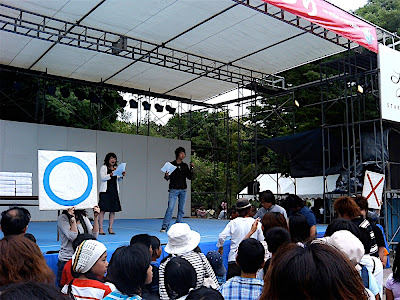
El otro día en las fiestas de Orio, antes de reunirme con Carlos, participé en un curioso concurso que parece ser tipico de este tipo de festivales. Los presentadores dicen una frase y, según consideremos que es verdadera o falsa, hay que ponerse en el lugar correspondiente (el círculo significa verdadero, la cruz significa falso).

この間折尾祭カルロスと合流する前に初めてこういうクイズに参加してみた。ルールは簡単:司会者が問題を言って、正しいと思う人は◯の看板の前に行って、違うと思う人は×の前に行く。不正解者はすぐアウトになって、だんだん参加者が減っていく。

Last Saturday at Orio Matsuri before meeting Carlos, I joined a particular (but typical) quiz. The rules were simple: You listen to a supposed fact, and you have to go to the «O» zone if you think it’s true, or to the «X» zone if you think it’s false. People in the wrong answer zone lose the game and can’t play any further.
quiz

Las primeras preguntas eran tan fáciles como recordar los nombres de los presentadores, que se habían presentado a ellos mismos minutos antes, pero poco a poco se fueron haciendo más difíciles. Una pregunta más típica fue, por ejemplo, «La casa de Sazae-san solo tiene planta baja». Donde Sazae-san es una una de las series de televisión más longevas del mundo.

最初の質問は司会者の名前なので簡単だったけど(自己紹介したばかりだったので)だんだん難しくなってきた。例えば「サザエさんの家には二階がない」とかそういう豆知識みたいな問題がいっぱいあった。

The first questions were quite easy, being the names of the guy and girl asking the questions (who had just introduced themselves to us), but the following questions weren’t as cheap. An example of a question is «Sazae-san’s house doesn’t have a second floor», referring Sazae-san, one of the longest-running TV series in history.
quiz

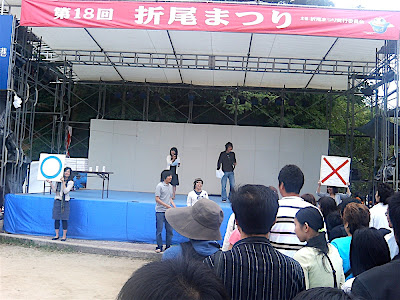
Y la segunda foto es de cuando lanzaron la pregunta «en Japón se puede asistir al jardín de infancia hasta los 18 años». Como veis, estábamos casi todos en la posición de «falso». ¡Pues no! Era verdadero. El 90% de los participantes nos caímos con esta pregunta tan sorprendente como irrelevante, pero eso es lo que mola de este tipo de juegos.

また2枚目の写真は「保育園は18歳まで通える」という問題のときの参加者の様子。ご覧の通り、ほとんどみんなが×のところに行っていた。しかしなんと正解は、◯だった!日本では保育園は18歳まで通っていいらしい。この問題で参加者はほぼ全滅になった。自分ももちろん。

And the second picture shows the field when the question was «in Japan, one can attend nursery school until one is 18 years old». As you can see, most of us answered «false». But it was actually true! Only a few people were left after this question.

ガチャガチャうんこの動画(日本語版) — El vídeo de la caca en japonés — Japanese crap video

El otro día os presenté a la caca que me compré en una máquina expendedora, y ha habido gente que me ha pedido ver el vídeo en japonés. Hoy os lo presento con todo el amor del mundo.

この間ガチャガチャでうんこを買ったとき、スペイン語で紹介映像を載せたけど、「日本語版を見たいな」という意見があって今日日本語版を公開します。

A few days ago, I introduced to you a piece of crap that I bought at a vending machine. And well, there has been some demand for a Japanese version, so here it is.

Como podéis ver, el vídeo no tiene nada que ver con el original.

ご覧の通り、中身はスペイン語版と・・・違う。

As you can see, the video has little to do with the original one.

muacaca

Muac / ちゅ / *kiss*.

Polo de naranja valenciana — バレンシアオレンジアイス — Valencia orange ice candy

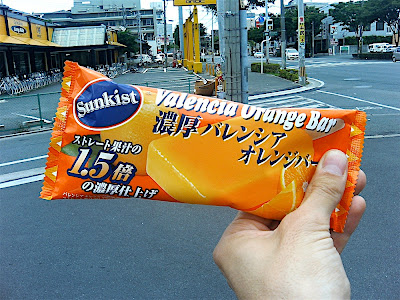
Ayer me fui al 24 horas a comprarme un polo y encontré uno de naranja. ¡Pero de naranja de Valencia!

昨日コンビニでアイスを買おうとして、オレンジアイスキャンディーを見つけた。しかも地元に近いバレンシアオレンジだって!

Yesterday I went to the convenience store to buy an ice candy, and I found this Valencia orange one. Actually, Valencia is near my hometown!

Contiene un porcentaje de zumo concentrado de naranja valenciana, vamos, lo mismo que contienen los zumos que compras en el supermercado. Estaba bastante bueno, ¡sabía a naranja de verdad!

バレンシアオレンジが何パーセントか入っていて、スーパーで買うジュースの果汁とあまり違わなかったけど、本当に美味しくて、本物のオレンジの味がした。

It contents some real Valencia orange juice concentrate, so it’s not that different from the fruit juices you can buy at the supermarket. It was quite good, and it tasted quite like real orange juice.