Archivo del Autor: ale

Hakata Dontaku Minato Matsuri — 博多どんたく港祭

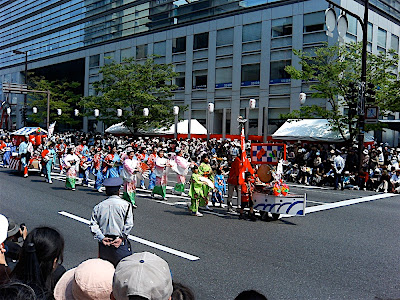
El día 3 de Mayo pude asistir por fin al Dontaku, uno de los dos festivales con más asistencia de Japón (unos dos millones de personas). El festival es mayormente una sucesión de desfiles, con los típicos puestos de comida (yatai) a los lados de la calle.

5月3日、初めてどんたくを見ることが出来た。どんたくを見に来る人は大体200万人で、全国の最大規模の祭りといえる。基本的にパレードが続いて、沢山の出店が並ぶ。

On May 3rd I was at last able to see Dontaku, one of the largest festivals in Japan with around 2 million people watching. The festival consists in parades and mobile food stalls (yatai) on the sides of the road.
El origen del nombre del festival es la palabra holandesa zondag (domingo). Antiguamente la palabra «dontaku» se usaba en Japón para referirse a un día libre.

どんたくの語源は「zondag」というオランダ語。「日曜日」という意味で、昔の日本語では「どんたく」という発音で休日の意味を表していたらしい。

The origin of the festival’s name is the Dutch word «zondag» (Sunday). Its Japanese pronunciation «dontaku» used to mean «a day off», but is obsolescent now.
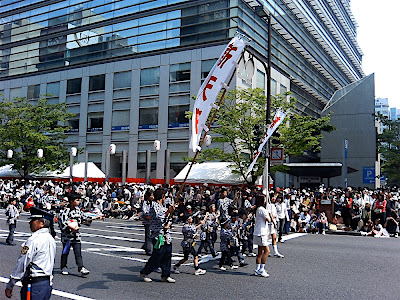
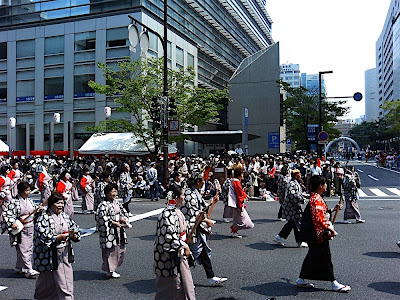
En los desfiles más tradicionales se veía mucha gente con shamisen o haciendo palmas con dos shamoji (paleta de servir arroz).

和風っぽいパレードには三味線を弾いたり、しゃもじをたたいたりする人が多かった。

In most traditional parades, you can spot many people playing shamisen or making sound with two shamoji (rice serving paddles).
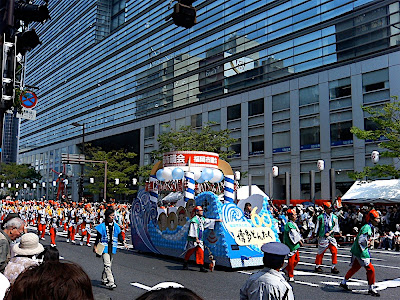
Y algunos incluso tenían vehículos decorados para la ocasión. En general me pareció un festival más tranquilo que otros en los que he estado. Pero la próxima vez intentaré desfilar yo, y seguro que no me parecerá lo mismo.

デコレーションされている乗り物もあった。今まで行ったことのある他のお祭りに比べると、ゆっくりめかな。来年出てみたら、この意見も変わるかもしれないけど。

Some parades even had matsuri-arranged cars or trucks. At the end, I thought this festival is more slow-paced than other ones I’ve been too. But maybe my opinion will change next year when I go out with a parade.
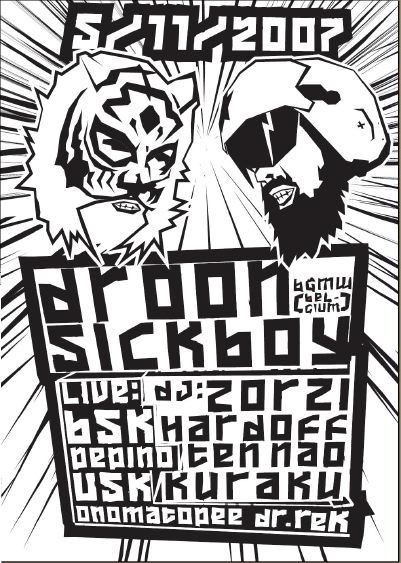
2007/05/11 Droon / Sickboy in Fukuoka

Vamos a tocar este viernes en Fukuoka. El evento va a molar un montón, así que no os lo perdáis si podéis venir.

今週の金曜日、天神の近くでライブをやる。楽しいこと間違いなし。来れる人は是非!

We’ll be playing live in Fukuoka this Friday. Looks like a very fun event, so come if you can!

actualizado / 更新 / updated: tickets, time↓

2007/05/11 Droon / Sickboy in Fukuoka flyer

info

date: 2007/05/11
time: 22:00~05:00 (pepino at 00:30)
place: SUPER SPACE LINE ZONE.1 (Fukuoka)
address: 福岡県福岡市中央区警固1-4-27 警固エイトビル2F
tickets: ¥1500 with 1 drink

live

SICKBOY (from Belgium)
DROON (from Belgium)
USK (24tek, 8bitpeoples)
pepino (mesuenanlastripas, 24tek)
BSK (shanshui)
Dr Rek
onomatopee (onomatopia, bonnou break)

dj

kuraku (24tek, chi no ame)
ten (chi no ame, versus, wyvern)
DJ DASAI aka hard-off (ZOD, 24tek)
NAO (Kitakyushu)
ZORZI (oil works)

Viaje a Beppu — 別府へ出発! — Trip to Beppu

El viernes, para aprovechar el puente de la Golden Week, nos fuimos a Beppu (provincia de Oita), y hemos vuelto ayer. Este es un mapa del recorrido que hicimos.

ゴールデンウィークの後半、一泊二日で別府に行ってきました。これが私たちが行きに使った道の地図です。

We went to Beppu (Oita prefecture) to use up a pair of the days off we get for the Golden Week. This is a map for the path we used.

kamen rider

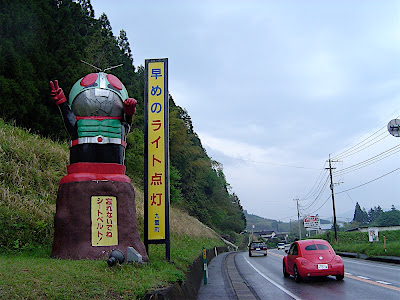
Por el camino, el famoso superhéroe Kamen Rider nos recuerda que nos pongamos el cinturón de seguridad. Parece que la policía de Oita lo tiene como mascota.

仮面ライダーが、大分の警察署のキャラクターになっているのでしょうか。途中で交通安全を呼びかける仮面ライダーに出会いました。

Famous super hero Kamen Rider reminds us to keep our seat belts fastened. It looks like the Police of Oita chose him as a mascot.

camino, montaña

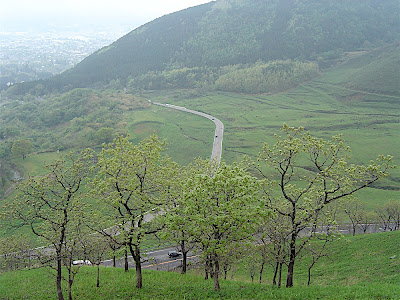
Encontramos mil paisajes durante el viaje.

道中、緑いっぱいの景色に癒されました。

On our way to Bappu, we were able to enjoy beautiful landscapes such as this.

ai en la playa

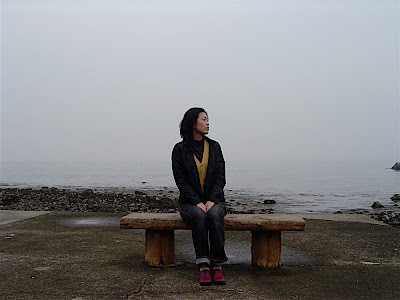
Llegamos a la playa de Beppu, pero estaba nublado. Ai disfruta de la brisa marinera.

別府の海岸に到着。楽しみにしていたけど、あいにくの曇り。それでも久しぶりに磯の香りを楽しみました。

We arrived at Beppu beach, but it was cloudy. This is Ai enjoying the passing breeze.

yo en el pueblo

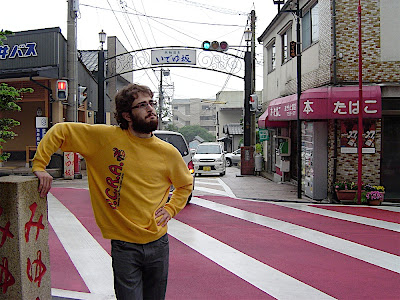
Y aquí yo en la zona más pintoresca que hemos encontrado en el pueblo, que es la zona de onsen. Todos los cruces estaban pintados de rojo. En estas dos últimas fotos salimos los dos mirando hacia la derecha, taciturnos.

別府の温泉街の一角。別府ではこういう交差点の真ん中が赤に塗られているところが多かった。ちょっと可愛かった。

And this is the quaint onsen area of the town. All crossings were painted in red, and we found that very cute.

durmiendo en el coche

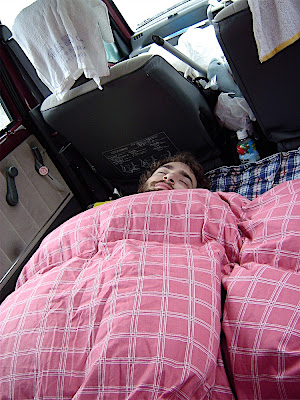
Hicimos la noche en el coche. Porque los hoteles estaban carísimos e imposibles de reservar, y también queríamos probar eso de dormir en el coche. Con un saco de dormir abierto y un futón para taparse, la verdad es que no se duerme mal. ¡Un día es un día!

突然宿も取らずに行ったので、車の中で寝る事に。念のため、寝袋と布団を持参して、どちらかというとそうなることを期待していたところもあったりして。毎日は無理だけど、たまにはこういうのもいいかも?!

We hadn’t booked any hotel and weren’t able to find any free room, so we were lucky to have brought a sleeping bag and a futon in case we had to sleep in the car. And it’s not bad if it’s just one night.

Anuncios pixelados —ドット絵で宣伝 — Pixel art advertising

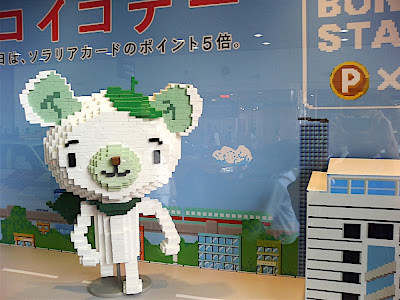
Esto no pasa solo en Japón, pero siempre mola ver por la calle anuncios hechos a base de píxeles perfectamente visibles.

日本だけじゃないと思うけど、お店の宣伝にでもドット絵が使われている。凄いなぁと思った。

This is not something that happens in Japan only, but it’s always nice to find pixel art advertising when you’re out for a walk.

osito

Visto en Fukuoka.

福岡で見かけた。

Spotted at Fukuoka.

Castela, ¿bizcocho japonés? — カステラの本家は? — Castella, Japanese cake?

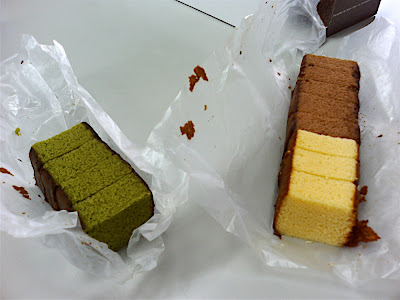
Una compañera de trabajo ha traído castela para todos. Es un bizcocho típico de Nagasaki, pero se vende en todo Japón. Había tres tipos: de chocolate, de queso y de té verde. Pero los sabores eran mucho más suaves que los colores. El de queso y el de chocolate no sabría distinguirlos de bizcochos españoles.

会社の仲間がカステラをお土産に持ってきてくれた。長崎の名物だけど、チーズ味とチョコレート味は、スペインに似ているケーキがあって、違いが分からなかった。

A co-worker brought «castella» as a present for all. It’s a typical sponge cake from Nagasaki, and it’s well known — at least in Fukuoka. There were three kinds: green tea, chocolate and cheese. Their flavors were softer than their colors and, actually, I wouldn’t be able to tell the cheese or chocolate ones apart from a Spanish sponge cake.

castella

Lo curioso es que este bizcocho en realidad lo llevaron los misioneros portugueses en el siglo XVI a Nagasaki (el único puerto internacional de Japón en la época) y lo llamaban pão de Castela (pan de Castilla), con lo que la receta se supone original de territorio español (Castilla fue uno de los reinos que se unieron para formar España).

ちょっと調べてみたら、カステラを最初に長崎に持ってきたのは16世紀のポルトガルの宣教師だった。ポルトガル語で「pão de Castela」といって、意味は「カスティーリャのパン」。カスティーリャ王国は当時のイベリア半島にあった国で、他の王国と合体してスペインになった。という事は、カステラの作り方はスペインかその当時のスペインの植民地から伝わってきたでしょう。

The interesting part is, this cake was brought to Nagasaki (the only international harbor in Japan at that time) by Portuguese missionaries during the 16th century. Pão de Castela means «bread from Castilla» in Portuguese, and Castilla was one of the realms which eventually formed Spain. This probably means that the recipe originated in Spain or in one of the colonies Spain had at that time.